
Explore everything you need to know about TPU 3D printing, from beginner-friendly filaments to premium options.
Introduction
TPU (Thermoplastic Polyurethane) is one of the most exciting materials in 3D printing, known for its flexibility, durability, and high-performance qualities. Whether you’re designing flexible prototypes, creating custom parts, or looking for a material that can handle wear and tear, TPU is a top choice.
This guide will walk you through everything you need to know about TPU 3D printing—from TPU filament selection to troubleshooting common issues. By the end of this guide, you’ll have the insights needed to unlock TPU’s full potential.
This guide is perfect for:
-
3D Printing Enthusiasts looking to take their TPU prints to the next level.
-
Engineers and Designers integrating TPU into real-world products.
-
Manufacturers using TPU for prototyping or low-volume production.
-
R&D Teams experimenting with flexible, durable parts.
What is TPU for 3D Printing?
What is TPU
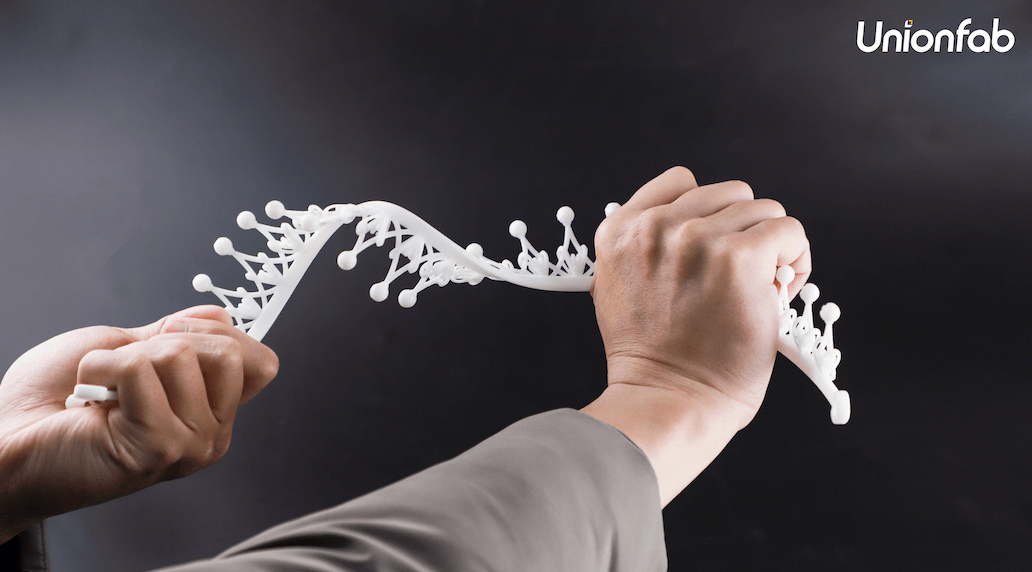
TPU (Thermoplastic Polyurethane) is a flexible, durable material that combines the best of both worlds: the elasticity of rubber and the toughness of plastics. This thermoplastic elastomer can stretch, compress, and return to its original shape, making it ideal for parts that need to endure repeated stress.
TPU fills a critical gap that other materials struggle with—flexibility combined with durability. From automotive gaskets to wearable tech components, TPU’s unique properties make it indispensable in a wide range of industries.
Why is TPU Ideal for 3D Printing?
1. Unique Balance of Flexibility and Strength
TPU offers where alternative materials fall short: Most rigid plastics (e.g., PLA, ABS or PETG) lack the flexibility needed for soft, stretchable parts, while softer materials (like silicone) are difficult to 3D print.
TPU bridges this gap by offering elasticity and toughness, making it the go-to material for countless applications, from DIY projects to cutting-edge industrial innovations.
2. Perfect for All Skill Levels
One of TPU’s standout features is its ability to work seamlessly with a wide range of 3D printing technologies, from beginner-friendly FDM to industrial-grade SLS and MJF. This compatibility makes it the go-to material for everyone in the 3D printing space.
3. Durability in Harsh Environments
Unlike many flexible plastics that degrade quickly, TPU is highly resistant to abrasion, chemicals, and UV exposure. This makes it indispensable in industries like automotive, medical, and industrial manufacturing, where parts must withstand tough conditions while maintaining flexibility.
Read more: Is TPU Toxic?
Key Properties of TPU
Getting to know TPU’s key properties is essential to making the most of this material:
|
Property |
Range/Value |
What It Means (for Practical Application) |
|---|---|---|
|
Shore Hardness (A) |
50–95 |
Softer (50–60) = Flexible parts (e.g., seals, wearables); |
|
Tensile Strength |
30–55 MPa |
Moderate (30–40 MPa) = Light-duty; |
|
Elongation at Break |
300%–700% |
Highly elastic (300–500%) for soft grips; |
|
Abrasion Resistance |
100–250 mm³ |
Moderate (100–150 mm³) for general use; |
|
Compression Set |
10%–25% |
Excellent recovery after printing (10–15%) = Good for seals; |
|
Water Absorption |
0.5%–1.5% |
Low (0.5–1.0%) = Outdoor/moisture-exposed parts; |
|
Glass Transition Temperature (Tg) |
-40°C to -10°C |
Low Tg = Flexibility in cold environments (winter gear, outdoor parts) |
|
Melt Volume Rate (MVR) |
10–50 cm³/10 min |
Low MVR (10–20 cm³) = Fine details; |
|
Specific Gravity |
1.1–1.2 g/cm³ |
Lighter (1.1) = Wearables, shoes; |
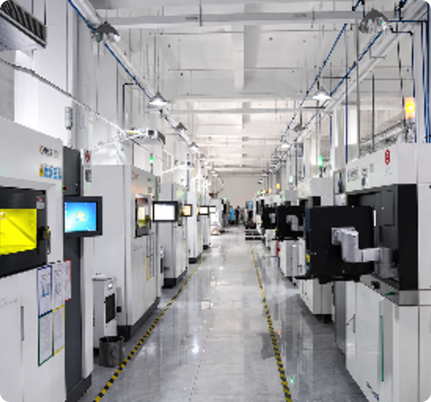
Unionfab offer a versatile SLS TPU material, suitable for high-performance applications requiring flexibility, durability, and moisture resistance.
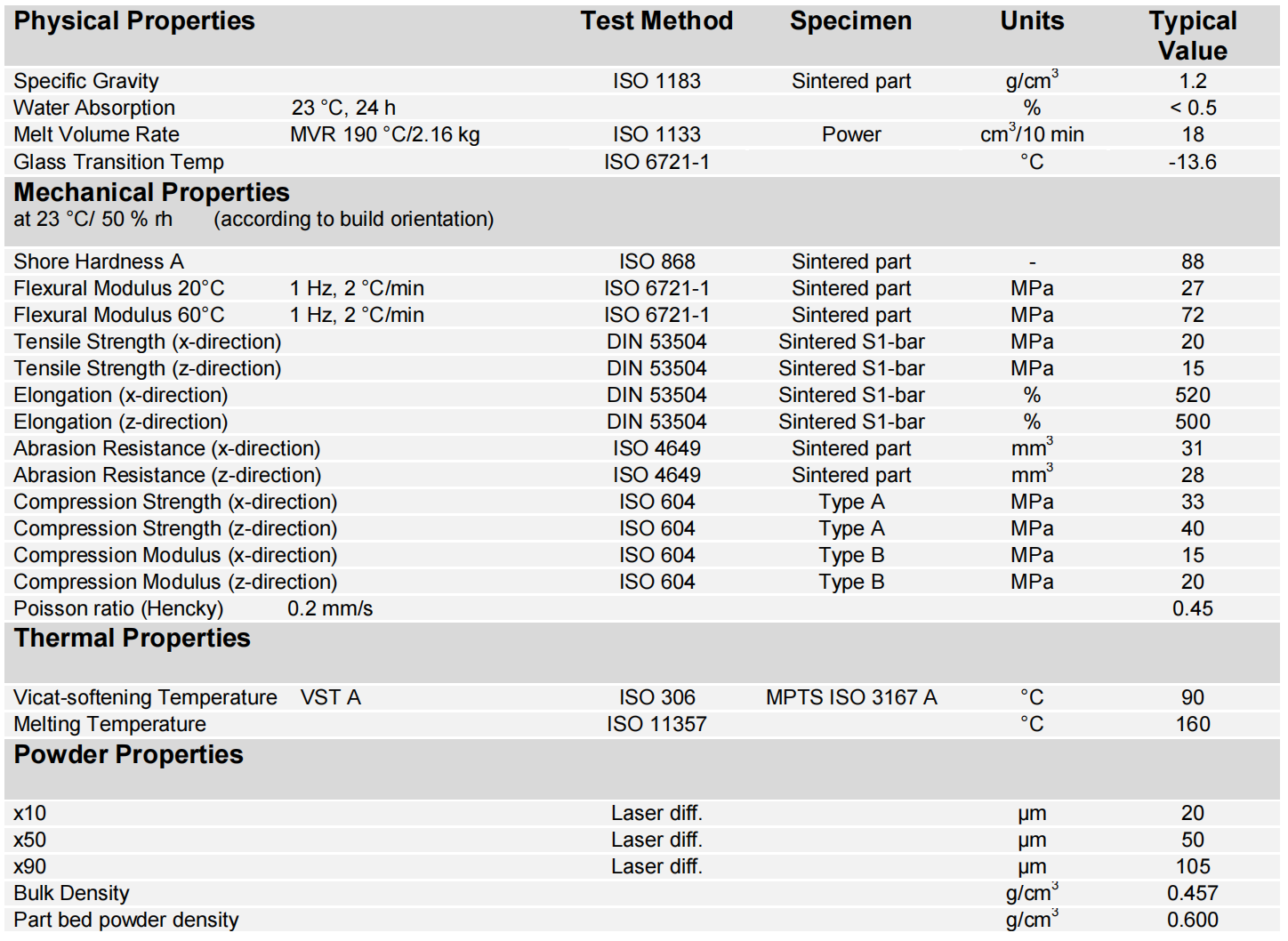
Visit our TPU material page to see all the technical details you need!
Comparing TPU 3D Printing Technology
FDM vs. SLS vs. MJF TPU
When choosing the right 3D printing method for TPU, it’s crucial to understand how different technologies impact the final product. Each method—FDM, SLS, and MJF—offers unique benefits and considerations.
In this section, we’ll compare the key differences of FDM, SLS and MJF TPU 3D printing to help you make the best decision for your project.
|
Parameter |
FDM TPU |
SLS TPU |
MJF TPU |
|---|---|---|---|
|
Principle |
FDM works by melting a filament and extruding it layer-by-layer to form a 3D object. |
SLS uses a laser to sinter powdered TPU layer by layer. |
MJF uses an inkjet array to deposit a binding agent onto the TPU powder. |
|
Printing Process |
 |
 |
 |
|
Printing Result |
 |
 |
 |
|
Print Temperature (°C) |
220 – 250 |
N/A (Laser Sintering) |
N/A (HP Powder Printing) |
|
Bed Temperature (°C) |
40 – 60 |
N/A |
N/A |
|
Layer Height (mm) |
0.1 – 0.3 |
0.08 – 0.15 |
0.08 – 0.12 |
|
Print Speed (mm/s) |
★★★★☆ |
★★★☆☆ |
★★★★★ |
|
Support Requirement |
Requires support |
No support required |
No support required |
|
Surface Finish |
★★☆☆☆ |
★★★★☆ |
★★★★★ |
|
Elasticity Performance |
★★★☆☆ |
★★★★☆ |
★★★★★ |
|
Application Scenarios |
Home DIY, Soft prototypes |
Production-grade parts, Footwear, Automotive parts |
High-end medical, Automotive, Footwear |
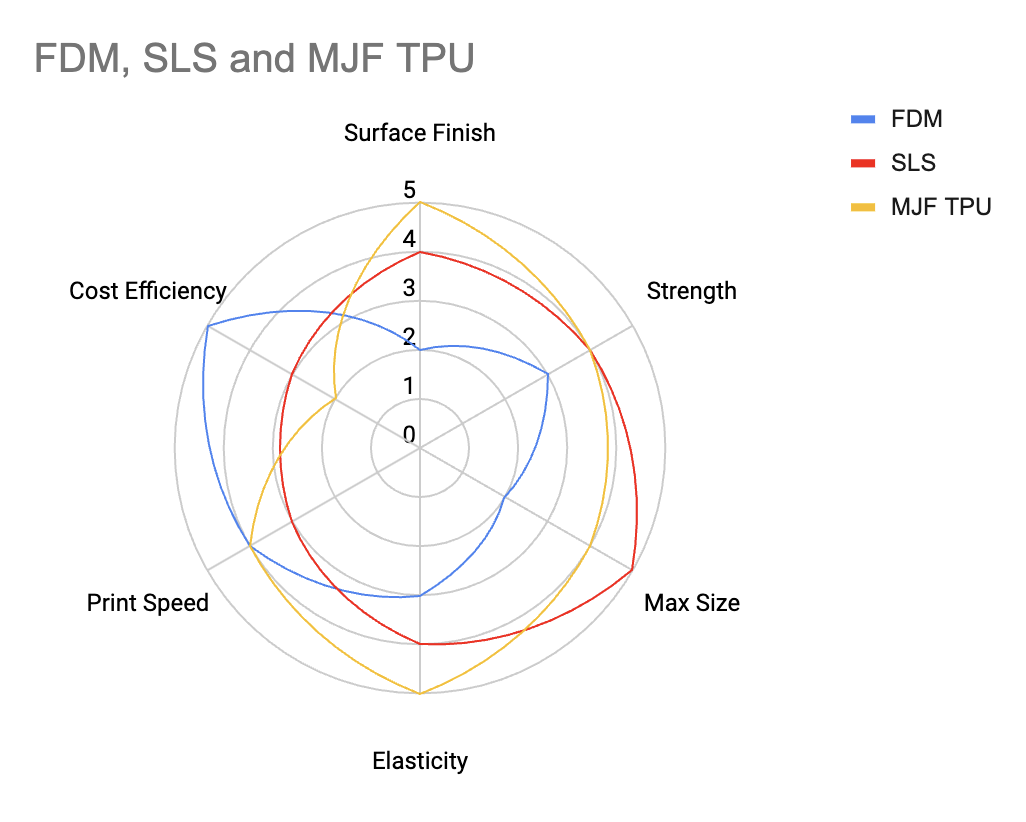
Below, we use a Spider Chart to compare FDM TPU, SLS TPU, and MJF TPU across important parameters:
Key Points
-
FDM TPU: The FDM process is simple and affordable, making it ideal for DIYers, prototyping, and low-cost, low-volume parts. It’s widely accessible and doesn’t require advanced equipment.
-
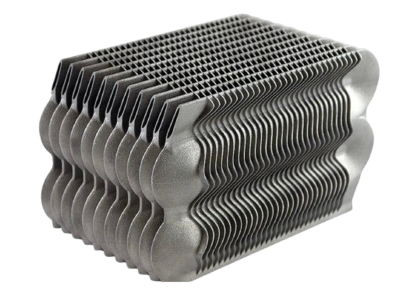
SLS TPU: SLS prints high-strength, durable parts without the need for support structures, making it excellent for industrial applications where material properties are critical. The process is slower and more expensive, but it delivers high precision and robustness.
-
MJF TPU: MJF is fast and reliable, producing high-quality parts with consistent mechanical properties, making it ideal for high-end applications. However, It can be expensive and the build size in MJF printers is generally smaller.
Comparing Chinese TPU 3D Printing Providers
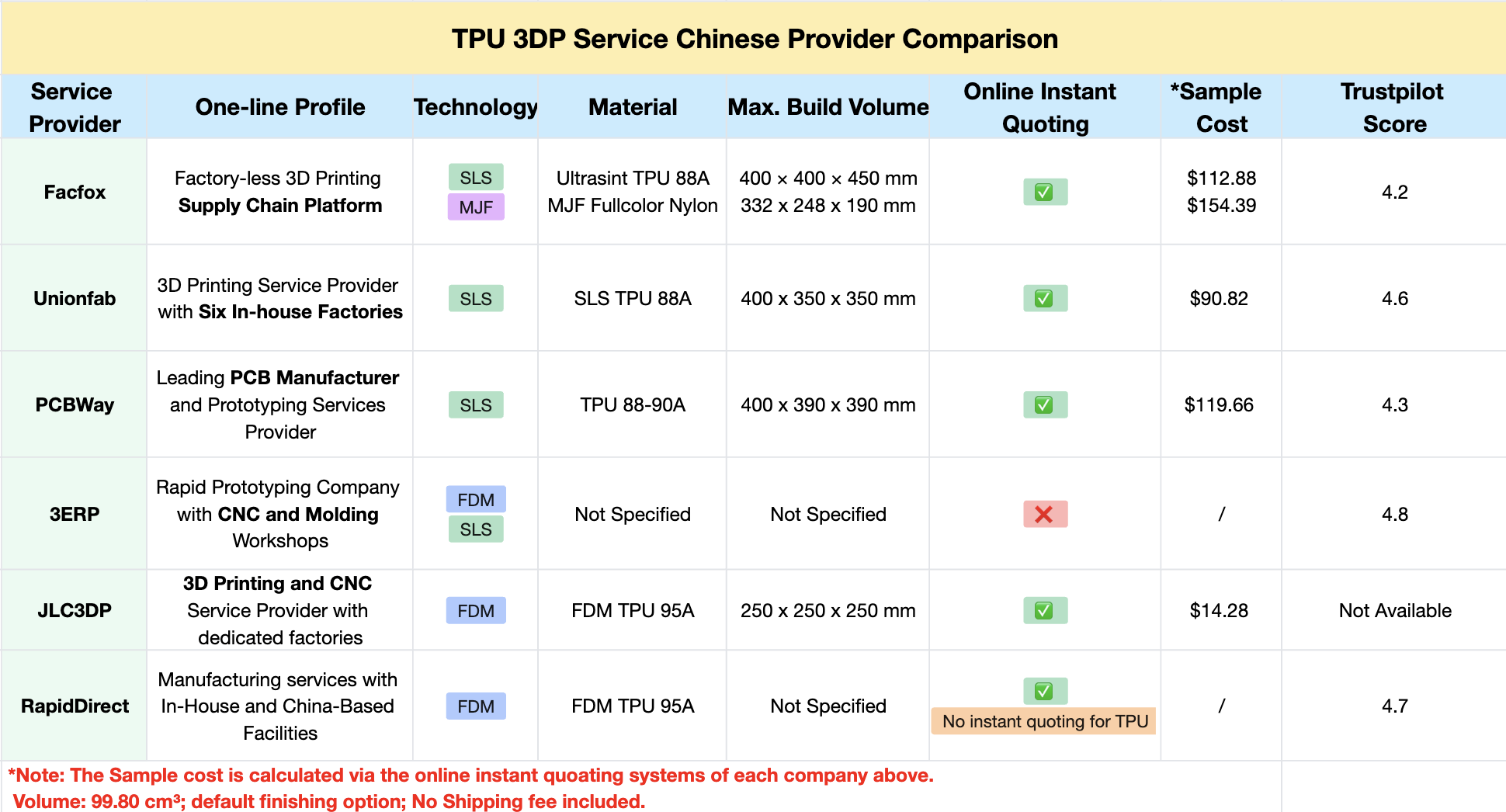
China is home to a number of leading providers offering competitive solutions for TPU 3D printing. To help you make an informed decision, we’ve compared some of the top 3D printing companies in China based on their capabilities and services:
Which Provider to Choose:
-
For Consistent Quality: Unionfab offers a reliable solution for businesses requiring SLS TPU printing, backed by multiple in-house factories, good customer feedback (view on Trustpilot), and competitive pricing.
-
For Variety and Flexibility: Facfox is suitable for users who need different technologies (MJF and SLS) and materials, with easy access to various options and instant quoting.
-
For Budget-Conscious Small Projects: JLC3DP offers affordable FDM TPU printing, ideal for basic prototypes or DIY users with budget constraints.

TPU Filament Selection Guide
Types of TPU Filaments
|
TPU Type |
Shore Hardness |
Perfect For |
Printing Tips |
Available Products |
|---|---|---|---|---|
|
Soft TPU  |
Shore 60A-80A |
Gaskets, soft seals, wearable devices |
Requires direct-drive extruders, slower speeds, and careful temperature settings |
– Recreus Filaflex 60A: Max flexibility, best for experienced users |
|
Medium TPU  |
Shore 80A-95A |
Phone cases, protective covers, industrial seals |
Easier to print, handle, and feed, even on less advanced printers |
– NinjaTek NinjaFlex 85A: Superior flexibility and durability |
|
High-Performance TPU  |
Customizable |
Medical devices, automotive parts, extreme wear resistance |
Built for durability, resistance to heat, chemicals, and physical wear |
– Ultrafuse TPU 85A by BASF: High wear resistance, tensile strength, oils & greases resistant |
Key Takeaways:
-
Soft TPU is best for parts requiring maximum flexibility, but it can be tricky to print due to its flexibility.
-
Medium TPU offers a balance of flexibility and toughness, making it ideal for a wider range of everyday products and easier to handle for most printers. For beginners, starting with medium TPU (85A-95A) is a good choice.
TPU Filament Pricing
Beginner-Level TPU Filaments: $20–$35 per kg
|
Brand |
Product Name |
Features |
Price Range |
|---|---|---|---|
|
Overture |
Affordable, decent flexibility, good printability |
$26–$30/kg |
|
|
Duramic 3D |
Consistent quality, easy to print |
$24–$28/kg |
|
|
SainSmart |
Reliable entry-level option with moderate elasticity |
$30–$35/kg |
These filaments are affordable, easy to work with, and great for first-time users experimenting with flexible materials.
Key Features:
-
Ease of Printing: Less prone to warping or clogging, often stiffer (higher Shore hardness, 95A+), making them easier for beginners.
-
Applications: Basic flexible parts, casual projects, or prototypes without demanding mechanical or environmental requirements.
2. Mid-Tier TPU Filaments: $30–$60 per kg
|
Brand |
Product Name |
Features |
Price Range |
|---|---|---|---|
|
MatterHackers |
MH Build Series TPU Collection |
Good balance of strength and flexibility, versatile |
$28–$35/kg |
|
Fillamentum |
Flexfill TPU Filament Collection |
High abrasion resistance, smooth finish |
$40–$60/kg |
|
Polymaker |
Easy to print, combines flexibility and toughness |
$30–$40/750g |
Mid-tier filaments strike a balance between affordability and advanced properties, offering better flexibility, toughness, and durability.
Key Features:
-
Mechanical Properties: Improved flexibility, layer adhesion, and abrasion resistance.
-
Printability: Slightly more challenging than beginner-level but manageable with experience.
-
Applications: Functional prototypes, wearable items, or moderate stress components.
3. Premium-Grade TPU Filaments: $40–$100+ per kg
|
Brand |
Product Name |
Features |
Price Range |
|---|---|---|---|
|
NinjaTek |
Superior flexibility (85A), excellent tear resistance |
$50/0.5kg |
|
|
Recreus |
Extremely flexible (60A) or durable (95A), great layer adhesion |
$45–$60/0.5kg |
|
|
Bambu Lab |
Optimized for high-speed printing, industrial-grade quality |
$42/kg |
These are high-performance filaments engineered for demanding industrial or professional applications. They excel in properties like flexibility, tear resistance, and precision but come at a higher cost.
Key Features:
-
Mechanical Properties: Exceptional flexibility (as low as Shore 85A), tear/abrasion resistance, and layer bonding.
-
Printability: More challenging, often requiring fine-tuned printer settings, a direct-drive extruder, and experience.
-
Applications: Industrial-grade parts, prosthetics, seals, gaskets, robotics, and other high-performance needs.
While FDM TPU filaments are a popular choice for 3D printing flexible parts, for more demanding applications where precision, consistency, and enhanced performance are critical, MJF and SLS TPU materials stand out.
Why is TPU so Hard to Print?
FDM 3D printing with TPU can be tricky, and if you’re a DIY enthusiast or even a pro, you’ve probably run into a few common challenges. But don’t worry—these issues are totally manageable with the right approach.
Here are a few of the main problems you might face when working with TPU:
Warping and Adhesion Issues
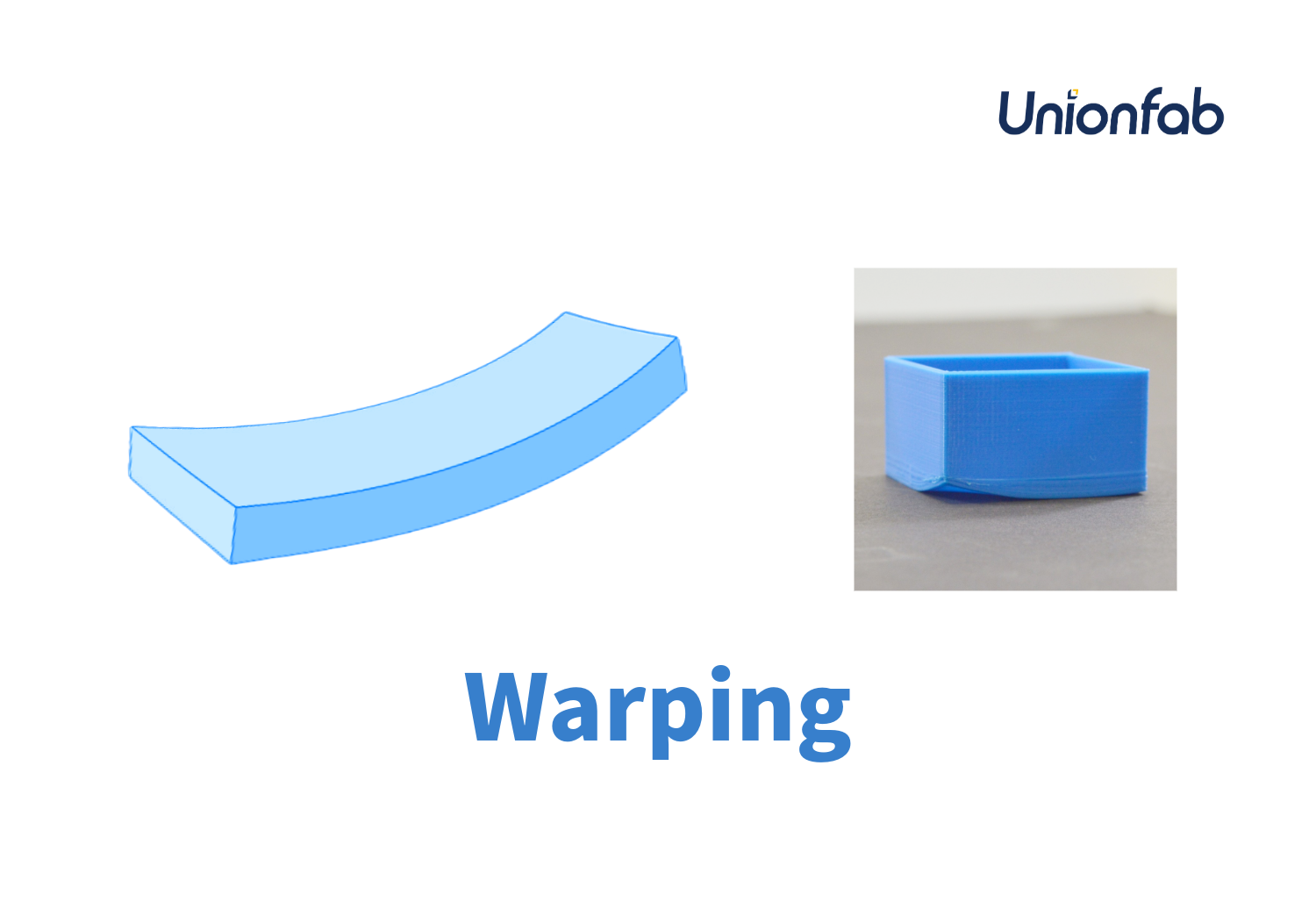
TPU, like other flexible materials, is prone to warping and poor adhesion to the print bed. This is especially troublesome for parts requiring fine details or consistency.
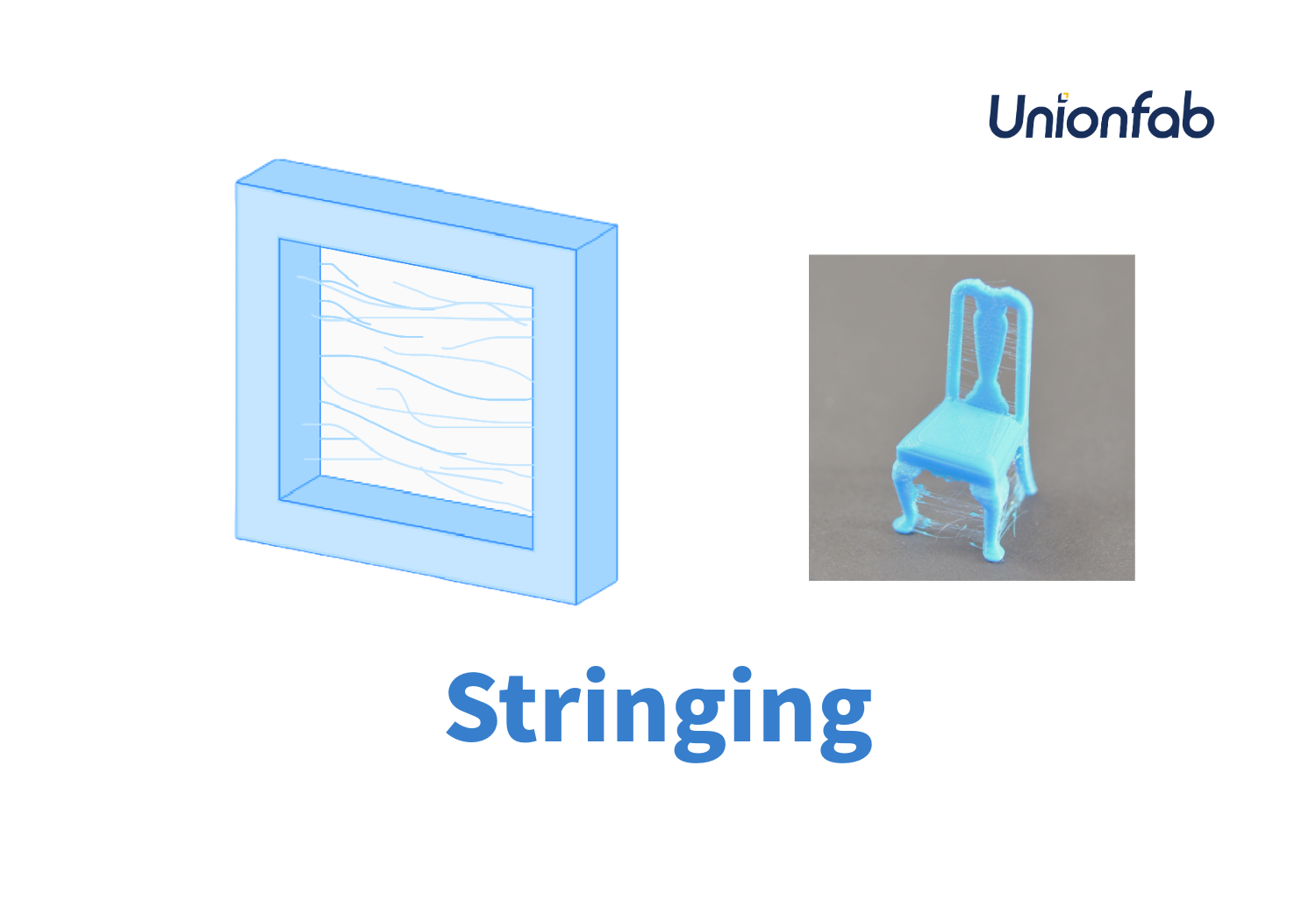
Stringing and Blobbing