
Learn how to choose the right material for prototypes, functional parts, and low-volume production in this practical guide for engineers, product developers, procurement teams, and manufacturing decision-makers.
Introduction
Choosing the right material is one of the most important decisions in any custom manufacturing project. Whether you are developing an early-stage prototype, validating a functional component, or preparing for low-volume production, material selection directly affects part performance, manufacturing cost, lead time, dimensional accuracy, surface quality, and long-term reliability.
For engineering teams, the challenge is not simply finding a material that “can be made.” The real challenge is selecting a material that matches the part’s function, operating environment, mechanical requirements, production volume, and budget.
This guide is designed to help you make better material decisions for 3D printed and CNC machined parts before moving into production.
Why Material Selection Matters
A good material choice can improve part performance, reduce manufacturing risk, and shorten development cycles. A poor material choice can result in failed prototypes, unstable dimensions, surface defects, assembly issues, or unnecessary production costs.
Material selection should not be treated as a final detail after the design is complete. It should be part of the early DFM review process.
When evaluating materials, engineering and procurement teams should consider:
|
Decision Factor |
Why It Matters |
|---|---|
|
Part Function |
Determines whether the part is for appearance, testing, assembly, or end-use performance. |
|
Mechanical Strength |
Affects load-bearing capacity, impact resistance, stiffness, and durability. |
|
Temperature Resistance |
Important for parts exposed to heat, electronics, engines, tooling, or industrial environments. |
|
Chemical Resistance |
Critical for medical, automotive, fluid handling, and industrial applications. |
|
Dimensional Stability |
Impacts tolerances, assembly fit, and long-term performance. |
|
Surface Finish |
Influences appearance, friction, sealing, painting, plating, or post-processing options. |
|
Production Volume |
Helps determine whether 3D printing, CNC machining, or another process is more suitable. |
|
Lead Time |
Some materials are faster to source and manufacture than others. |
|
Total Cost |
Includes material cost, machining time, post-processing, inspection, and rework risk. |
Start with the Part Function
Before selecting a material, first define what the part needs to do.
Ask the following questions:
-
Is this part only for visual review or concept validation?
-
Will it be used for functional testing?
-
Does it need to withstand load, impact, heat, wear, or chemicals?
-
Will it be assembled with other parts?
-
Does it require tight tolerances?
-
Is this for one prototype, multiple iterations, or low-volume production?
-
Does the part need painting, polishing, dyeing, anodizing, plating, or other finishing?
The answers will help determine whether the project is better suited for 3D printing, CNC machining, or a combined manufacturing approach.
3D Printing vs. CNC: Material Selection Logic
3D printing and CNC machining support different material strategies.
3D printing is often ideal for complex geometries, rapid iteration, lightweight structures, and functional prototypes. CNC machining is often preferred for tighter tolerances, stronger engineering materials, metal parts, and production-grade performance.
|
Requirement |
Process Selection Guidance |
|---|---|
|
Geometry |
3D Printing may be better when: The part has complex shapes, lattices, internal channels, or organic structures. CNC Machining may be better when: The part has machinable features, flat surfaces, holes, threads, and precision interfaces. |
|
Speed |
3D Printing may be better when: Fast design iteration is needed. CNC Machining may be better when: The material is readily available and machining time is reasonable. |
|
Material Strength |
3D Printing may be better when: Functional plastic or metal prototypes are needed, depending on the process. CNC Machining may be better when: Production-grade metals or engineering plastics are required. |
|
Tolerance |
3D Printing may be better when: Standard prototype tolerances are acceptable. CNC Machining may be better when: Tight tolerances and critical fits are required. |
|
Surface Finish |
3D Printing may be better when: Post-processing can meet the appearance requirement. CNC Machining may be better when: High-quality machined surfaces or metal finishing are required. |
|
Volume |
3D Printing may be better when: Low quantities or complex parts are needed without tooling. CNC Machining may be better when: Low-to-medium volume precision parts are needed. |
Common 3D Printing Materials
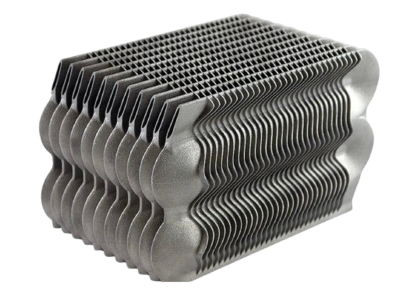
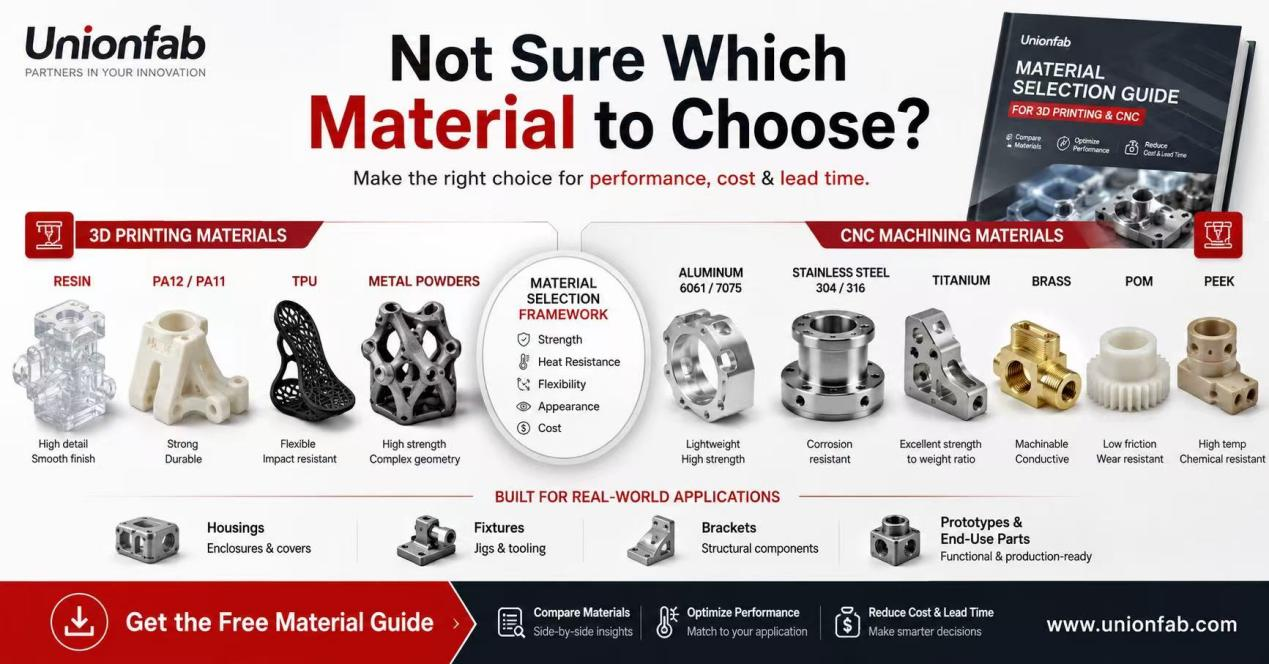
3D printing offers a wide range of materials for visual models, engineering prototypes, functional testing, and low-volume applications. The right choice depends on the process, part geometry, and performance requirements.
|
Material |
Process, Strengths & Applications |
|---|---|
|
Standard Resin |
Common Process: SLA Typical Strengths: Smooth surface, high detail, good appearance Common Applications: Concept models, display parts, form-fit prototypes |
|
Tough Resin |
Common Process: SLA Typical Strengths: Improved impact resistance and durability Common Applications: Functional prototypes, housings, snap-fit testing |
|
Transparent Resin |
Common Process: SLA Typical Strengths: Clear or translucent appearance Common Applications: Optical prototypes, fluid flow visualization, display models |
|
Nylon PA12 |
Common Process: SLS / MJF Typical Strengths: Strong, durable, stable, suitable for functional parts Common Applications: Housings, brackets, clips, fixtures, end-use plastic parts |
|
Nylon PA11 |
Common Process: SLS / MJF Typical Strengths: Tougher and more ductile than PA12 in many applications Common Applications: Functional parts, impact-resistant components |
|
TPU |
Common Process: SLS / MJF / FDM Typical Strengths: Flexible, elastic, impact absorbing Common Applications: Seals, grips, protective components, flexible prototypes |
|
Aluminum Alloy |
Common Process: Metal 3D Printing Typical Strengths: Lightweight metal performance, complex geometries Common Applications: Aerospace, robotics, lightweight structures |
|
Stainless Steel |
Common Process: Metal 3D Printing Typical Strengths: Strength, corrosion resistance, functional metal parts Common Applications: Industrial components, tooling, brackets |
|
Titanium Alloy |
Common Process: Metal 3D Printing Typical Strengths: High strength-to-weight ratio, corrosion resistance Common Applications: Medical, aerospace, high-performance engineering parts |
Engineering note: 3D printed materials may behave differently from injection molded or machined materials. Mechanical properties can vary depending on build orientation, process parameters, part geometry, and post-processing.
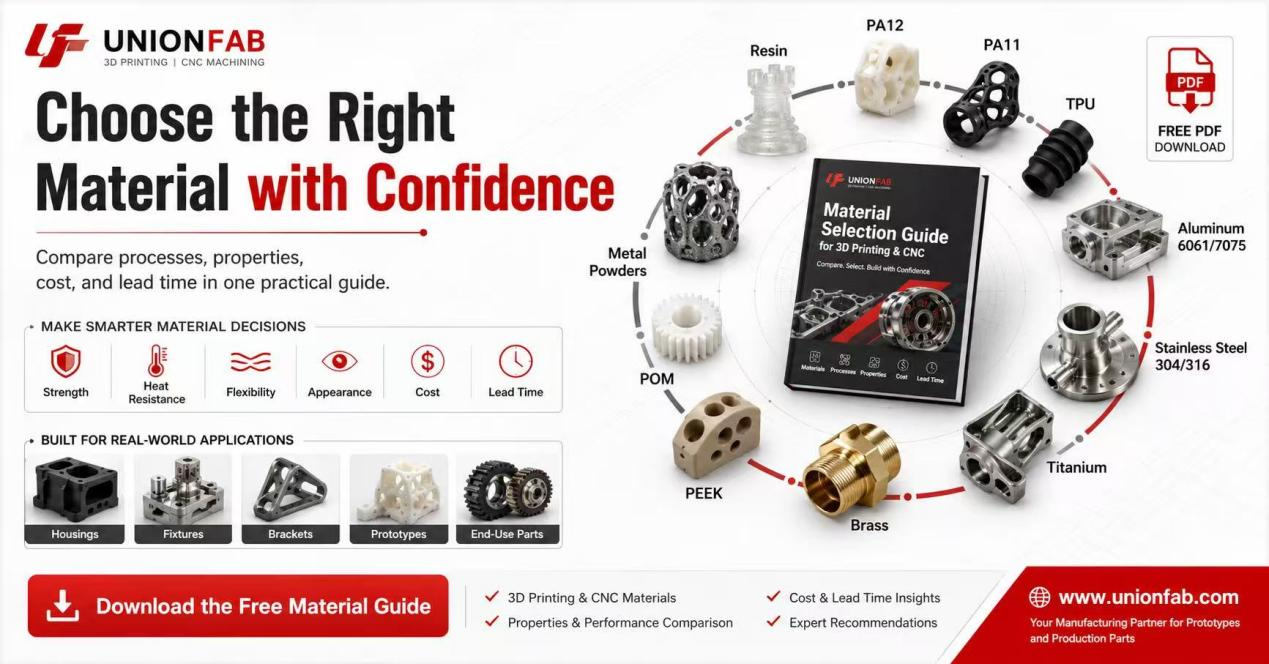
Common CNC Machining Materials
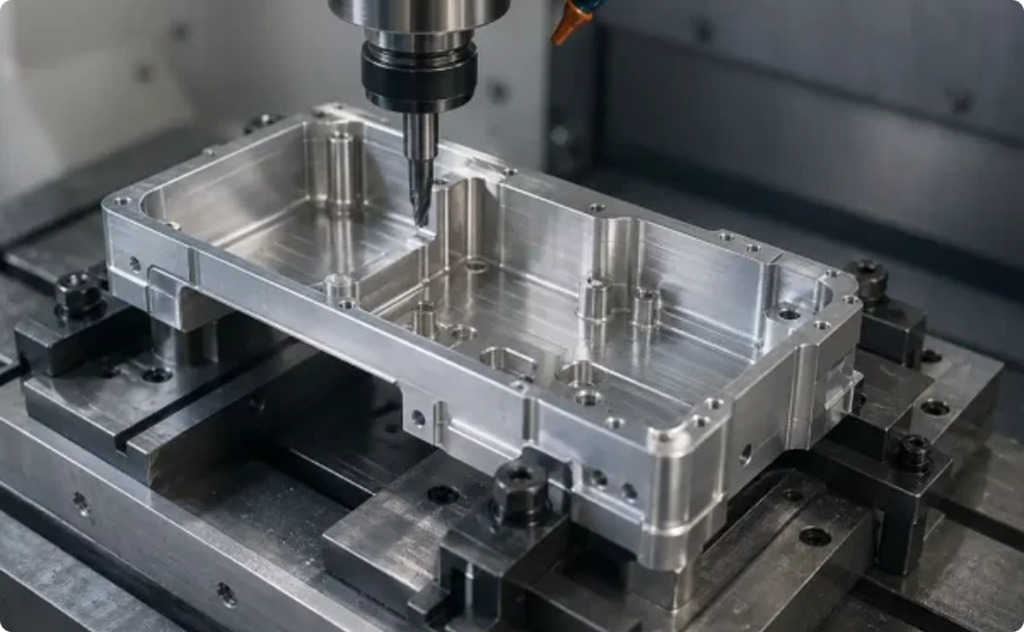
CNC machining is often selected when parts require precise dimensions, production-grade materials, excellent mechanical performance, and reliable assembly features.
|
Material |
Key Benefits & Common Applications |
|---|---|
|
Aluminum 6061 |
Key Benefits: Good strength, lightweight, excellent machinability, cost-effective. Common Applications: Housings, brackets, fixtures, prototypes, industrial parts. |
|
Aluminum 7075 |
Key Benefits: Higher strength than 6061, lightweight, strong mechanical performance. Common Applications: Aerospace, robotics, structural components. |
|
Stainless Steel 304 |
Key Benefits: Corrosion resistance, good general-purpose performance. Common Applications: Medical devices, food equipment, industrial components. |
|
Stainless Steel 316 |
Key Benefits: Higher corrosion resistance, suitable for harsh environments. Common Applications: Marine, medical, chemical, fluid handling parts. |
|
Stainless Steel 17-4 PH |
Key Benefits: High strength, good corrosion resistance, heat treatable. Common Applications: Aerospace, tooling, high-strength components. |
|
Brass |
Key Benefits: Good machinability, corrosion resistance, attractive finish. Common Applications: Fittings, connectors, decorative and functional components. |
|
Copper |
Key Benefits: Excellent electrical and thermal conductivity. Common Applications: Electrical contacts, heat sinks, conductive components. |
|
Titanium |
Key Benefits: High strength-to-weight ratio, corrosion resistance, biocompatibility. Common Applications: Aerospace, medical, high-performance parts. |
|
POM / Delrin |
Key Benefits: Low friction, good dimensional stability, wear resistance. Common Applications: Gears, bushings, rollers, precision plastic parts. |
|
Nylon |
Key Benefits: Tough, wear-resistant, lightweight. Common Applications: Mechanical components, spacers, guides, functional plastic parts. |
|
PEEK |
Key Benefits: High temperature resistance, chemical resistance, excellent performance. Common Applications: Medical, aerospace, electronics, demanding industrial applications. |
|
ABS |
Key Benefits: Cost-effective, machinable plastic, good impact resistance. Common Applications: Housings, prototypes, fixtures. |
|
Polycarbonate |
Key Benefits: Strong, impact-resistant, transparent or translucent options. Common Applications: Protective covers, lenses, functional prototypes. |
Material Selection by Application
Different applications require different material priorities. The table below provides a practical starting point.
|
Application |
Recommended Material Direction & Manufacturing Notes |
|---|---|
|
Visual Concept Models |
Recommended Material Direction: SLA resin, transparent resin. Manufacturing Notes: Focus on surface quality, detail, and appearance. |
|
Functional Plastic Prototypes |
Recommended Material Direction: PA12, PA11, tough resin, CNC plastics. Manufacturing Notes: Choose based on strength, flexibility, dimensional stability, and testing needs. |
|
Electronic Housings |
Recommended Material Direction: PA12, ABS, polycarbonate, aluminum. Manufacturing Notes: Consider heat resistance, assembly features, surface finish, and electromagnetic shielding needs. |
|
Jigs and Fixtures |
Recommended Material Direction: PA12, aluminum 6061, POM. Manufacturing Notes: Prioritize durability, dimensional stability, and cost efficiency. |
|
Lightweight Structural Parts |
Recommended Material Direction: Aluminum 7075, titanium, metal 3D printed alloys. Manufacturing Notes: Evaluate strength-to-weight ratio, load path, and geometry complexity. |
|
Medical Device Components |
Recommended Material Direction: Stainless steel, titanium, PEEK, selected resins. Manufacturing Notes: Confirm material compatibility, quality documentation, and regulatory requirements. |
|
Automotive Prototypes |
Recommended Material Direction: PA12, aluminum, stainless steel, engineering plastics. Manufacturing Notes: Consider heat, vibration, mechanical load, and surface requirements. |
|
Robotics Components |
Recommended Material Direction: Aluminum, PA12, POM, titanium. Manufacturing Notes: Focus on weight, stiffness, wear resistance, and assembly accuracy. |
|
Fluid Handling Parts |
Recommended Material Direction: Stainless steel 316, selected plastics, transparent resin for prototypes. Manufacturing Notes: Consider chemical resistance, sealing surfaces, and pressure requirements. |
|
High-Temperature Parts |
Recommended Material Direction: PEEK, stainless steel, titanium, selected metals. Manufacturing Notes: Confirm operating temperature and exposure duration. |
Key Material Questions Before Requesting a Quote
Before sending an RFQ, it is helpful to clarify the following information:
|
Question |
Why It Matters |
|---|---|
|
What is the part used for? |
Helps determine whether appearance, strength, precision, or cost is the top priority. |
|
Is the material already specified? |
If yes, the supplier can quote faster. If no, engineering recommendations may be needed. |
|
Are alternative materials acceptable? |
Alternative materials can reduce cost or lead time. |
|
What quantity is required? |
Quantity affects process selection, unit cost, and production planning. |
|
Are tight tolerances required? |
Tighter tolerances can increase cost and inspection requirements. |
|
Will the part be assembled with other components? |
Assembly features may require specific tolerances, threads, inserts, or mating surfaces. |
|
What surface finish is required? |
Finishing affects cost, lead time, appearance, and functional performance. |
|
Is inspection documentation required? |
Reports, material certificates, or FAI may be needed for critical projects. |
|
What is the target lead time? |
Material availability and production scheduling can affect delivery. |
Common Material Selection Mistakes
Material selection errors are common during early product development. Avoiding these issues can save time and reduce unnecessary cost.
Mistake 1: Selecting a material based only on appearance
A material may look correct but fail under load, heat, impact, or chemical exposure.
Mistake 2: Using overly tight tolerances without functional need
Tight tolerances increase manufacturing and inspection cost. Critical dimensions should be clearly defined, while non-critical dimensions can often use standard tolerances.
Mistake 3: Ignoring post-processing compatibility
Not every material works well with every finishing method. Painting, polishing, anodizing, plating, dyeing, and heat treatment should be considered early.
Mistake 4: Treating prototype material and production material as the same
Prototype materials may be suitable for testing but may not fully match the performance of production materials.
Mistake 5: Not providing application context
Without understanding how the part will be used, the manufacturer may not be able to recommend the best material or process.
What to Prepare for a Faster Material Review
To receive a faster and more accurate quotation, prepare the following information before submitting your project:
|
Information Type |
Recommended Notes |
|---|---|
|
3D CAD Files |
STEP, STP, or native CAD files are preferred. |
|
2D Drawings |
Include critical dimensions, tolerances, threads, and surface finish requirements. |
|
Material Requirements |
Specify the required material or acceptable alternatives. |
|
Surface Finish Requirements |
Include anodizing, polishing, bead blasting, painting, plating, dyeing, or other finishing needs. |
|
Quantity |
Indicate prototype, functional testing, or low-volume production quantity. |
|
Application Context |
Explain the operating environment and functional requirements. |
|
Critical-to-Function Features |
Identify areas that are most important for fit, assembly, or performance. |
|
Inspection Requirements |
Specify whether dimensional reports, material certificates, FAI, or special inspection are required. |
|
Target Lead Time |
Provide the expected delivery schedule. |
How Unionfab Supports Material Selection
Material selection is not only a purchasing decision. It is an engineering decision that should balance function, manufacturability, cost, and delivery risk.
Unionfab supports engineering teams, product developers, and procurement professionals with manufacturing solutions for:
-
3D printing
-
CNC machining
-
Metal 3D printing
-
Rapid prototyping
-
Functional testing parts
-
Low-volume production
-
Material and process recommendations
-
DFM review
-
Surface finishing and post-processing
-
Quality inspection support
By reviewing your CAD files, material requirements, application context, and production goals, Unionfab can help identify practical manufacturing options before production begins.
Quick Material Selection Checklist
Use this checklist before submitting your next RFQ:
|
Checklist Item |
Confirmed |
|---|---|
|
Part function is clearly defined |
☐ |
|
Required material is specified or alternatives are allowed |
☐ |
|
Operating environment is understood |
☐ |
|
Mechanical, thermal, or chemical requirements are defined |
☐ |
|
Quantity and production stage are confirmed |
☐ |
|
Critical dimensions and tolerances are identified |
☐ |
|
Surface finish and post-processing requirements are listed |
☐ |
|
Assembly or mating part requirements are included |
☐ |
|
Inspection and documentation needs are specified |
☐ |
|
Target lead time is provided |
☐ |
Final Recommendation
The best material is not always the strongest, the most advanced, or the lowest-cost option. The best material is the one that fits the part’s function, production method, quality requirements, timeline, and total project cost.
For early-stage projects, it is often helpful to discuss material options before finalizing the design. A manufacturability review can help reduce risk, identify better alternatives, and improve the success rate of your project.
Ready to Choose the Right Material for Your Project?
Upload your CAD files and project requirements to Unionfab for a manufacturability review and quotation.
Need Engineering Support?
Talk to Unionfab’s manufacturing team to discuss material options, process selection, tolerances, finishing, and production planning.